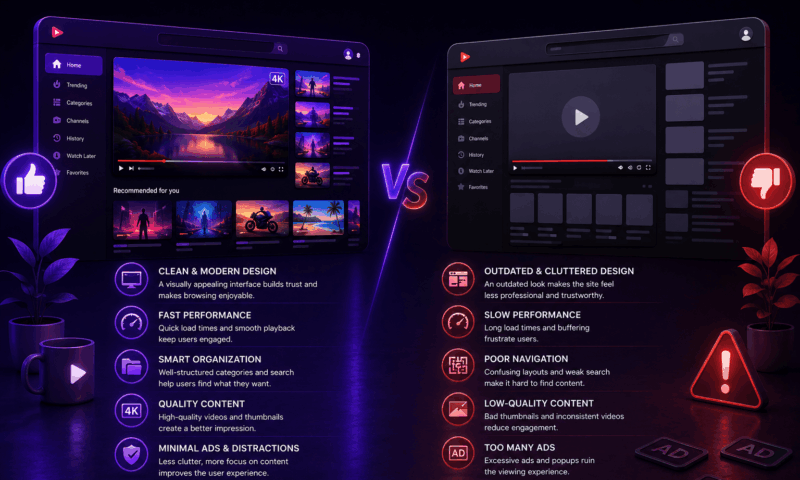
Why Some Tube Sites Feel Better Than Others
The Hidden Details That Shape User Experience You’ve probably experienced this before: you open one website and within just a few seconds it already…
Your cart is empty
Your cart is empty
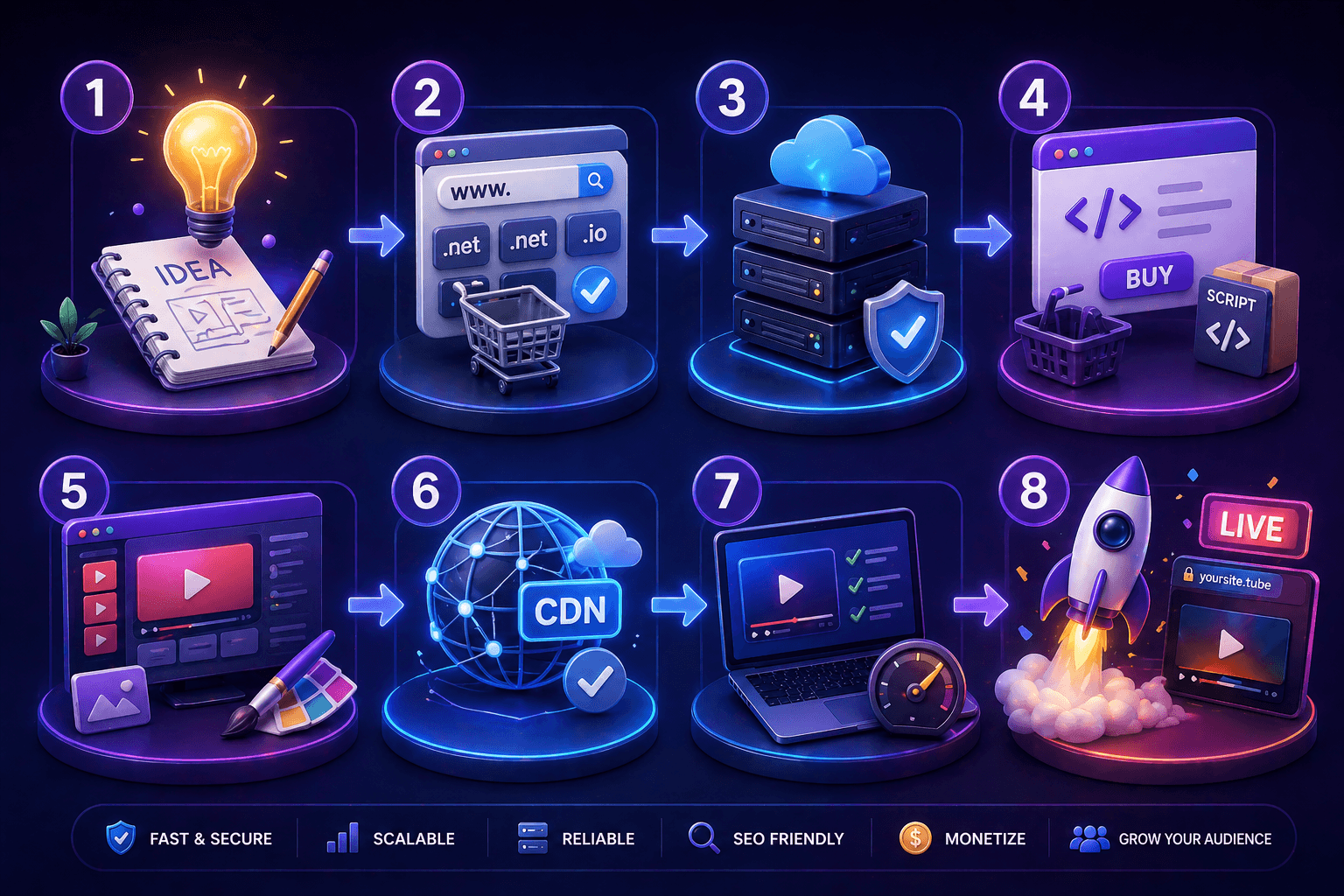
If you are planning to launch your own tube site, it’s important to understand one key idea: a successful launch is not a single action, but a sequence of well-structured decisions that define how stable, scalable, and efficient your project will be.
At first glance, it may seem like all you need to do is “buy a script and go live.” In reality, every step — from choosing a domain to setting up your infrastructure — has a direct impact on how your site performs and evolves over time.
This guide walks you through the essential stages most site owners go through before launch. It’s not a technical manual, but a practical roadmap that shows what needs to be done, in what order, and what really matters at each step.
The first step is choosing and registering a domain name.
Your domain is the address of your website — the way users will find and remember you. It’s also your first impression, so it’s worth taking the time to choose it carefully.
A strong domain should be:
You should also consider the domain extension (.com, .net, etc.) and confirm that your chosen name is available.
Over time, your domain becomes more than just a technical element — it becomes part of your brand identity and how users recognize your project.
The next step is selecting a server (or hosting) where your site will run.
For tube sites, this is especially important due to the large volume of video content and the need for stable, consistent performance.
When choosing a server, focus on:
At the beginning, you can choose a setup that matches your current needs, but it’s important to ensure it can scale as your traffic grows.
A reliable server is the foundation of a stable and responsive site — cutting corners here often leads to issues later.
Once you have a domain and a server, the next step is selecting a KVS license.
KVS (Kernel Video Sharing) is the engine that powers your site and defines its core functionality.
At this stage, it’s important to clearly understand what type of project you want to build:
Your goals will determine which version (for example, base or Ultimate) is the best fit.
If you already plan to implement advanced monetization or user management features, it often makes sense to choose an extended version from the start rather than upgrading later.
After selecting the engine, the next step is defining how your site will look and function — this is where the theme comes in.
The theme determines how users interact with your site, how content is presented, and how navigation is structured.
There are two main approaches:
This is a practical choice if you want to go live quickly using a reliable and tested structure.
This option is ideal if you want to build a more distinctive product and optimize the user experience for your audience.
In many cases, projects start with a ready-made theme and gradually move toward customization as they grow and better understand their users.
CDN (Content Delivery Network) is a system that helps deliver your content to users faster and more efficiently.
For video sites, this is particularly important, as most of the traffic is related to video streaming and media delivery.
A CDN helps to:
At the early stage, a CDN is not always required, but as your project grows, it often becomes a valuable — and sometimes essential — part of your infrastructure.
Launching a tube site is a structured, step-by-step process that starts with the essentials: a domain, a server, and a core platform.
From there, you define the look and functionality of your site through a theme, and optionally strengthen your infrastructure with a CDN.
By following these steps in the right order, you create a solid and flexible foundation for future growth.
The goal is not to make everything perfect from day one, but to build a working base that you can continuously improve, test, and scale as your project evolves.