
Scaling a Network of 80+ Websites
Large projects rarely grow successfully by chance. Behind stable growth, strong engagement, and consistent improvements there is usually a combination of thoughtful design, technical…
Your cart is empty
Your cart is empty
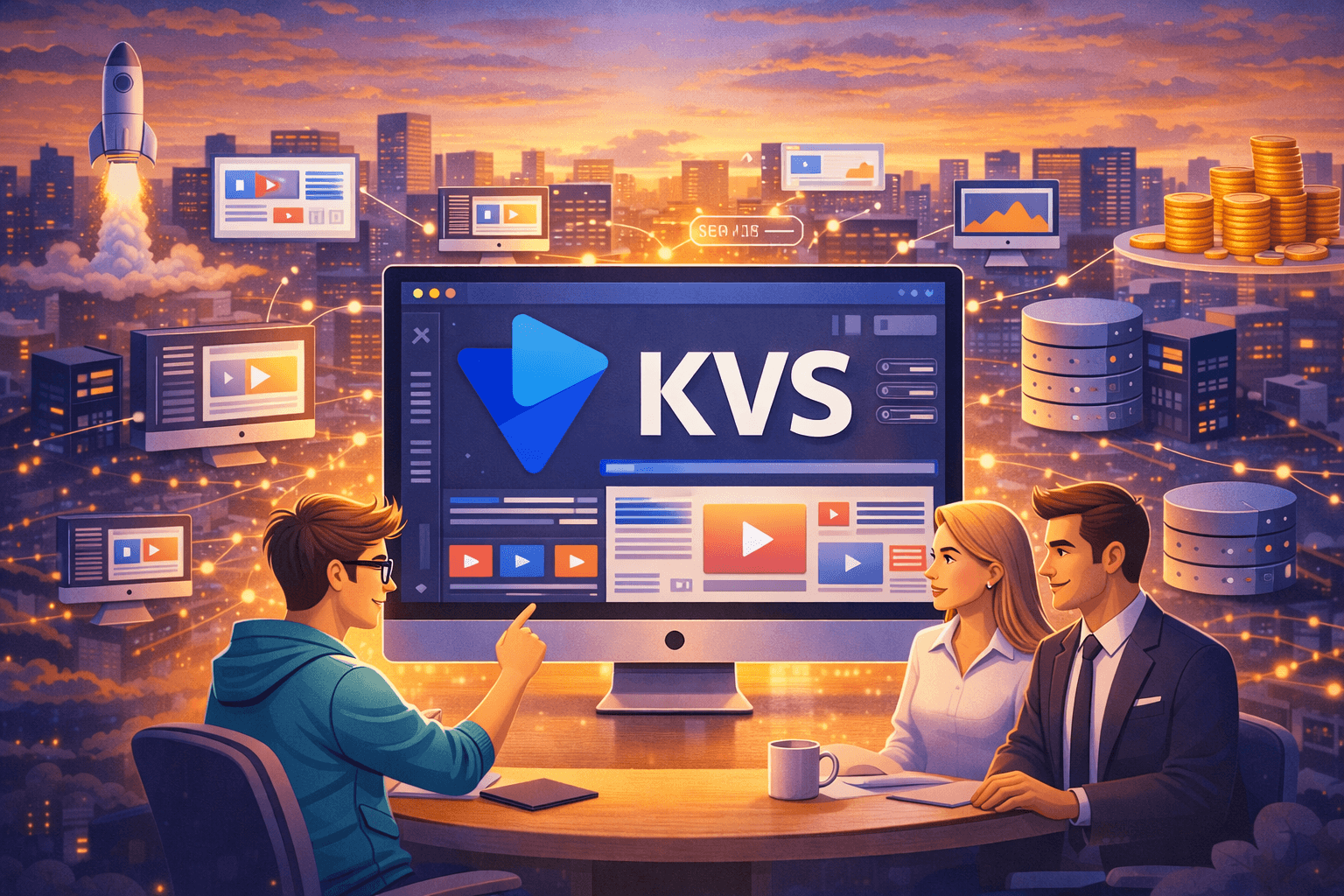
If you work with video websites or are planning to launch a tube project, you have probably come across the term Kernel Video Sharing (KVS). It is one of the most widely used CMS platforms specifically built for video-based websites.
Unlike general website builders, KVS is designed with a clear focus: handling large volumes of video content efficiently while giving owners full control over structure, functionality, and growth.
In this article, we’ll break down what KVS is, how it works, and why it is commonly chosen for building and scaling video platforms.
Kernel Video Sharing (KVS) is a CMS (Content Management System) developed specifically for websites where video is the primary type of content.
Unlike general-purpose CMS platforms such as WordPress, KVS was built from the ground up with video projects in mind. This means it already includes the tools needed to handle video processing, organization, and publishing — without relying heavily on third-party plugins.
KVS allows you to:
In short, it provides a ready-to-use foundation for launching and running a video platform with fewer limitations.
KVS combines all the essential tools required to run and manage a video website. It is not just a CMS, but a complete system that covers multiple layers of a project — from content handling to frontend display.
The system allows you to upload videos and automatically process them, including encoding, preview generation, and screenshot capture. It also supports multiple formats, making it easier to deliver content across different devices.
This automation significantly speeds up content publishing and reduces the need for manual work.
Videos can be organized using categories, tags, models, channels, and other entities. This creates a logical and scalable structure that benefits both users and search engines.
A well-organized structure makes it easier for visitors to discover content and improves overall navigation.
KVS uses a template system that controls how your site looks and behaves. You can choose from ready-made themes or develop fully custom designs tailored to your specific needs.
This flexibility allows projects to evolve visually without changing the core system.
The platform supports multiple monetization methods, including advertising, premium content, subscriptions, and integrations with third-party services.
This gives site owners the ability to build and adjust their revenue model over time.
KVS has gained strong adoption because it addresses the core challenges of running a video-based platform — especially as the project grows.
Video platforms require specific infrastructure. KVS is designed for storing, processing, and delivering video content efficiently, making it more suitable than general CMS solutions.
The system handles projects with large content libraries — from hundreds to tens of thousands of videos. With proper setup, it supports long-term growth without requiring a platform migration.
KVS allows deep customization of both frontend and backend functionality. This is essential for projects that want to stand out and build a unique user experience.
Many processes can be automated — from content uploading to tagging and publishing. This reduces operational workload and allows teams to focus on growth rather than routine tasks.
KVS is a strong choice if you:
However, for smaller websites without complex video requirements, KVS may be more advanced than necessary.
Kernel Video Sharing (KVS) is a powerful and specialized CMS built for video platforms. It provides the tools needed to manage content, structure websites, and scale projects efficiently.
For anyone working with video websites, understanding how KVS works is an important step toward building a stable, flexible, and scalable product.
As video content continues to grow, platforms like KVS remain a strong foundation for projects that require performance, control, and long-term scalability.