What to Check in a KVS Demo Before Choosing a Theme
A Practical Guide to Evaluating KVS Before You Decide If you are planning to launch a video website using Kernel Video Sharing (KVS), one…
Your cart is empty
Your cart is empty
When developing a video site on KVS, custom KVS design plays a key role in how effectively the project performs. While many focus on content, traffic, or monetization, design directly shapes how users interact with the platform.
Custom design is not just about visuals. It defines structure, interaction logic, and how users move through the site, make decisions, and engage with content.
In many ways, design shapes user behavior — and through that, it directly impacts overall site performance.
In this article, we’ll look at why custom KVS design matters, how it affects real user interaction, and which elements make the biggest difference in practice.
In KVS, custom KVS design goes beyond appearance. It defines how content is organized and how users interact with the system.
Custom design allows you to:
This is especially important for video sites, where users make fast, intuitive decisions.
The simpler and more logical the interface, the faster users begin interacting with content.
Custom KVS design plays an important role in optimizing user flows — how users move through your site.
This is not about how things look, but how they work.
For example:
Custom design helps remove friction, reduce unnecessary steps, and create a more natural flow.
As a result, users spend less time figuring things out and more time engaging with content.
A well-structured site directly affects how users perceive and navigate your content.
Even with a large content library, users should never feel overwhelmed.
Custom design helps:
This reduces cognitive load and makes the experience more intuitive.
Users don’t need to think about where to click — they simply follow the flow.
Every video site has its own audience and behavior patterns.
Ready-made themes provide a solid baseline, but they don’t always reflect the specifics of your project.
Custom design allows you to:
Over time, this creates a site that feels more responsive and aligned with user expectations.
As your project grows, new requirements inevitably appear.
This is where flexibility becomes critical.
Custom design allows you to:
This provides more freedom compared to standard themes and allows you to implement solutions without rigid limitations.
It also supports gradual, continuous improvement without the need for full redesigns.
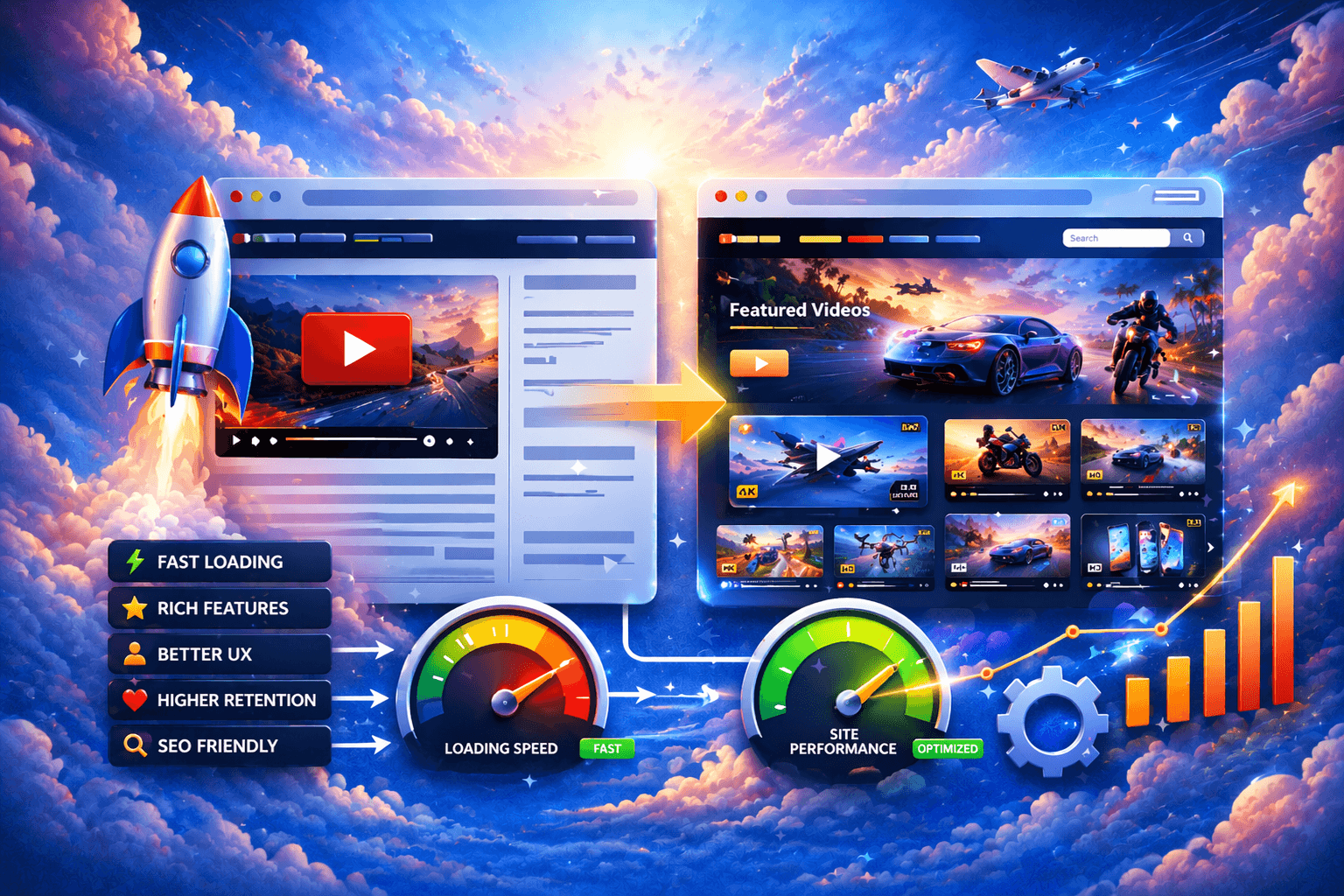
Video site performance is not only about technical metrics.
It also includes:
Custom design directly influences these factors.
It makes the site more intuitive, easier to use, and better aligned with real user behavior.
As a result, users engage faster and stay longer.
Custom KVS design is not just about appearance — it’s a practical tool for improving structure, logic, and user interaction.
It helps create a platform that is easier to use, more flexible to develop, and better adapted to real-world needs.
When you treat your video site as a product, custom KVS design becomes a key part of its performance and long-term growth.
It helps build a more scalable, user-focused platform that adapts to real usage patterns over time.